
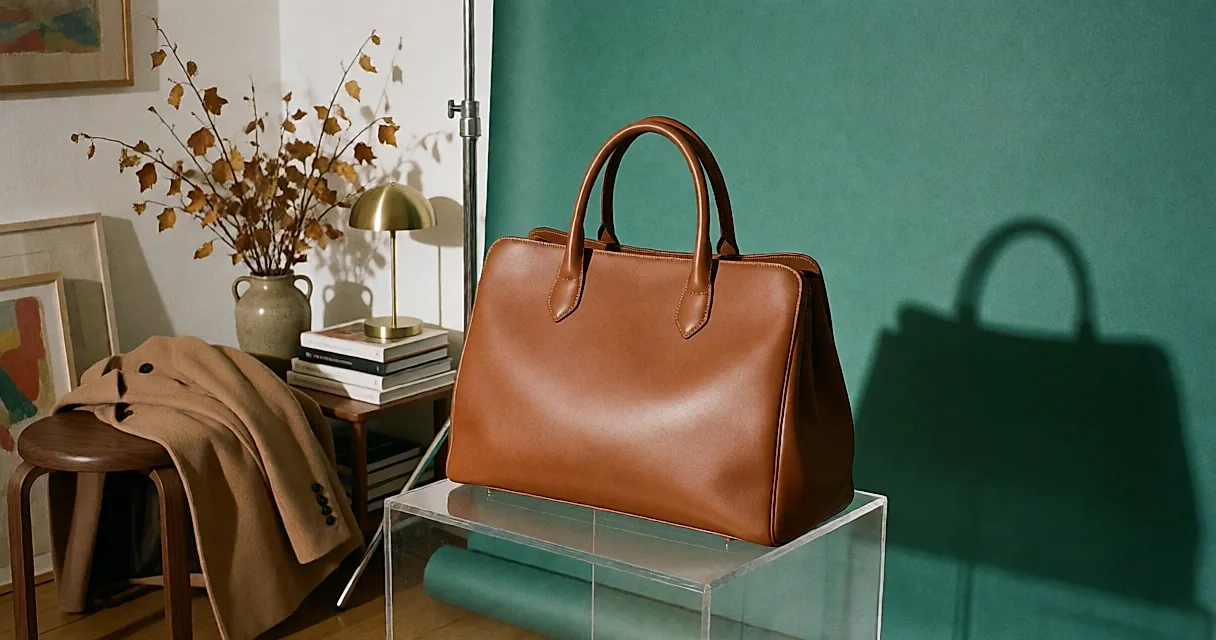
Two bags in the same shade, seen from three metres away, could pass for twins. Turned over on the workbench, one has tight, even stitches; the other has a thread snaking along a handle. That is the switch a leatherwork exhibition leaves in your head: the urge to look at bags inside out - and it costs nothing.
Stitching: watch the rhythm, not the colour
Stitching is not decoration; it holds the bag together. So look for even stitches: the same length, constant tension, no bunching thread and no stitches pulling the leather. Your eye picks up the rhythm in three seconds, even if you do not sew - and if something niggles, that is already an answer.
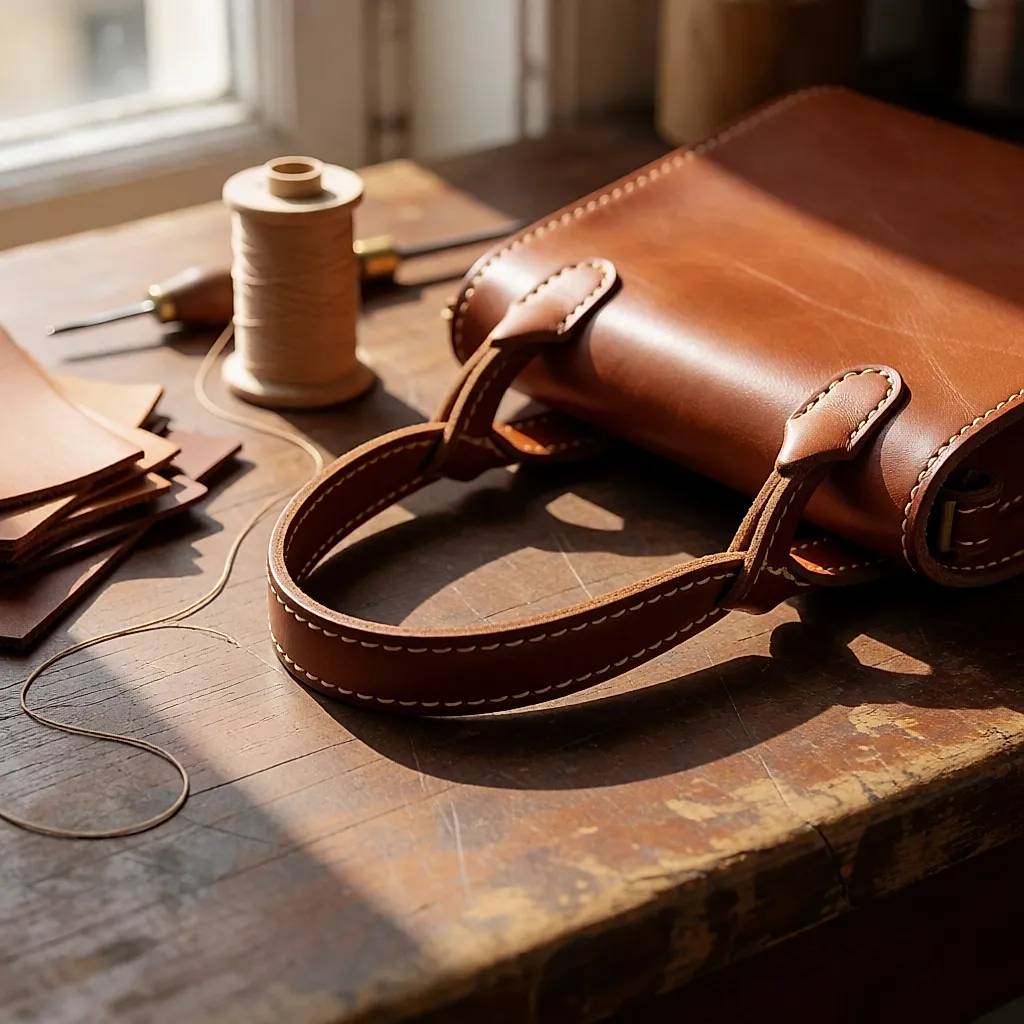
Next, look at the stress points: handle attachments, flap and gusset. That is where the thread works hardest and where a stitch is most likely to fail first. A bag rarely fails in the middle; it is more likely to fail at the handle attachment, in the street, when you have only got one hand free. Look at whether the stitching is neat on the inside, too: a clean inside says a lot about the rest.
The cut edge: the part few people look at
The cut edge is the raw edge of the leather, the part you see on the rim of a pouch or under a flap. When it is properly finished, it is dyed, waxed or turned inwards, and stays smooth under a finger. When the budget has been cut, it is left raw: two layers glued together, a ridge that crumbles, layers that peel apart over time. You will not see it from a shop window. With the bag in your hand, tilted towards the light, it is obvious.
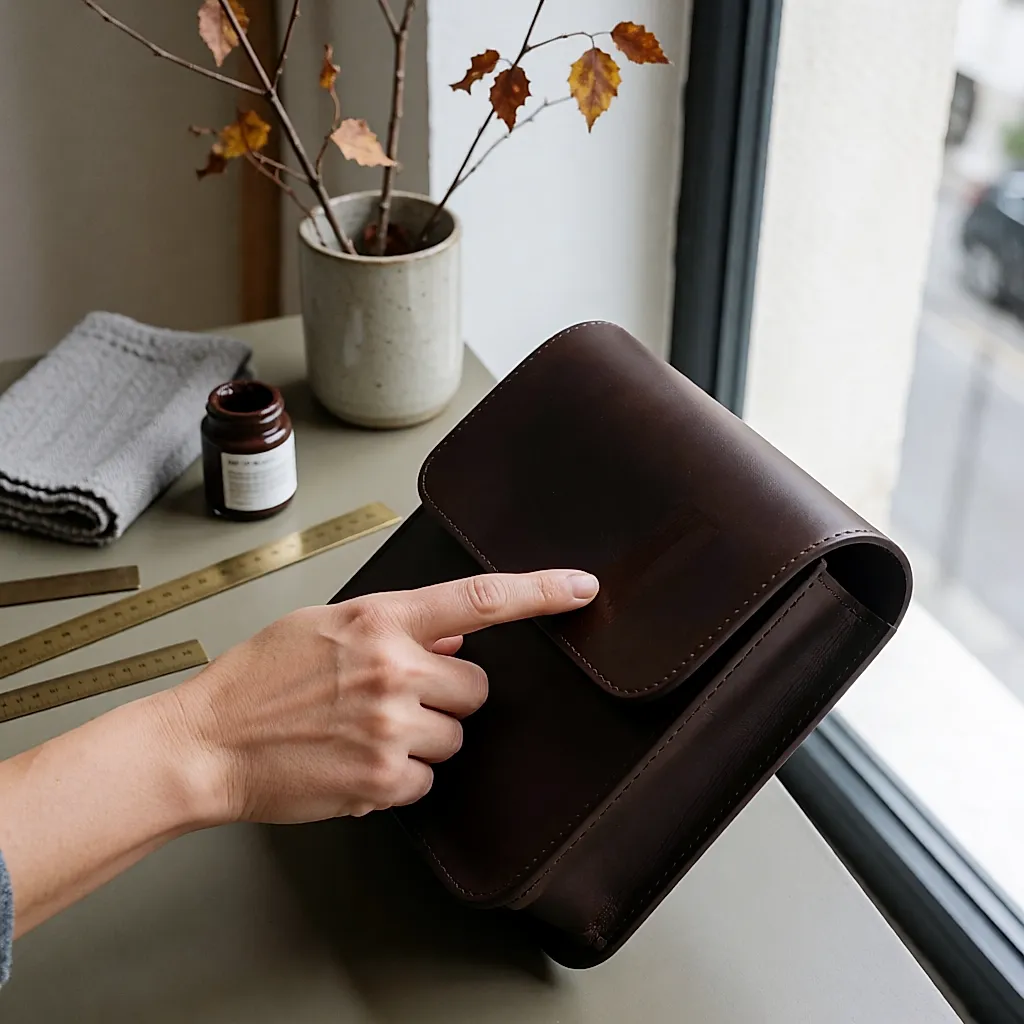
The same check applies to the base and the edges of the handles, two areas that rub constantly against jeans, a wall or a chair back. Run a finger over them: if it catches or leaves fine dust on the skin, be wary. Good leather tends to soften; reconstituted leather can crumble and does not recover in the same way.
The inside: reinforcements, lining and material
On a well-made bag, expect a reinforcement under each handle - a piece slipped between the lining and the body, which you can feel with your thumb as a firmer patch. Without it, the handles can pull directly on the leather and the bag may eventually slump into that tired-bag look you would not wish on anyone.
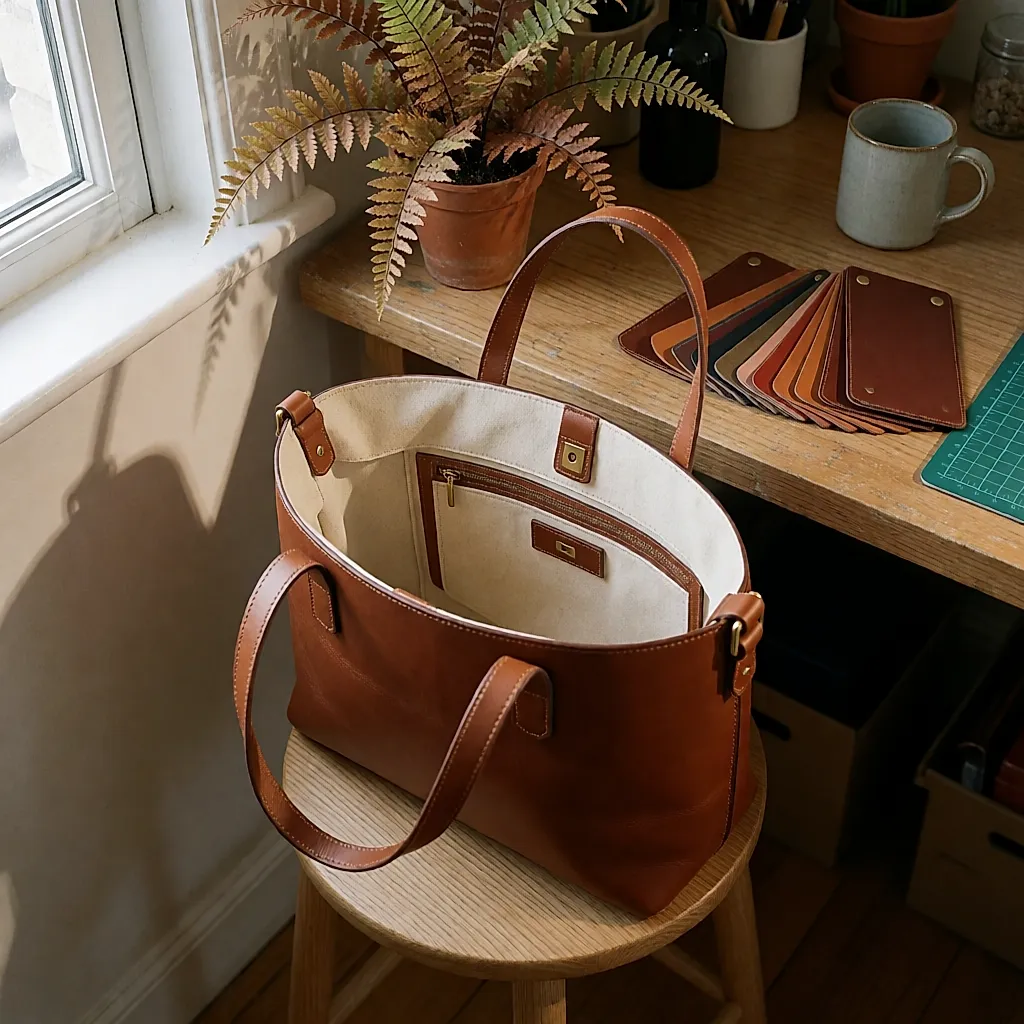
The lining is the part you do not show, so it is often where cost-cutting shows first: tightly woven cotton canvas, linen or leather, it does not matter, as long as it is stitched straight, with no loose threads. A lining that sheds fluff on a new bag can leave fluff everywhere and may eventually jam your purse zip. On material, look for full-grain leather - the top layer, which is hard-wearing and tends to develop a patina rather than crack - or vegetable-tanned leather. And check the label: if synthetic fibres dominate, you may be buying a coated material rather than a solid leather bag.
Second-hand: the checklist does not change, it gets longer
On a pre-owned bag, the checks above still apply; add wear. Look at the corners of the lining, the stitching where the handles attach, the fastening that should still close with a clean snap, and the smell: a piece stored somewhere damp can keep a cellar-like smell that does not always fade. Patinated leather is not worn-out leather - patina is colour darkening where you handle it, while wear is material disappearing.
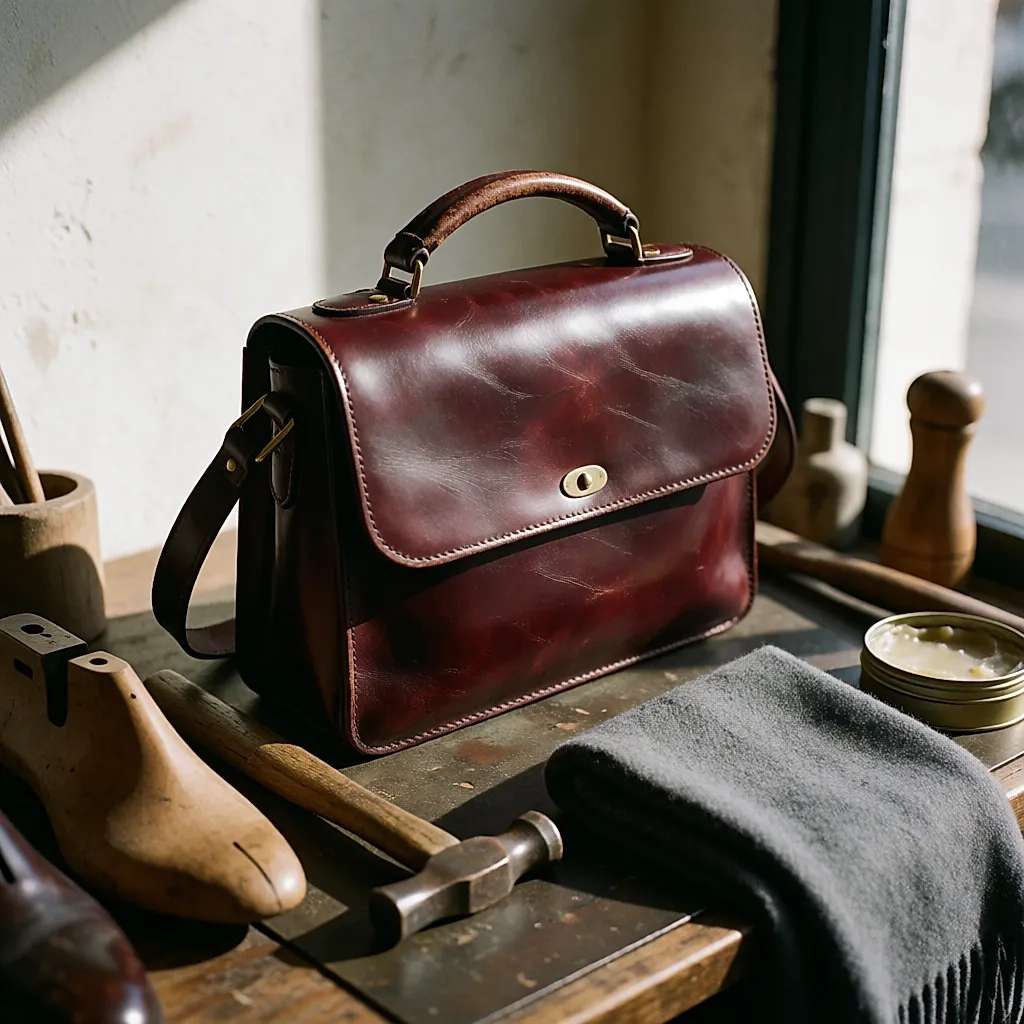
And there is the question that can save everything: will you be able to get it repaired? A detachable handle or a lining that opens cleanly can be fixed by a leather repairer. A bag glued together everywhere is much less likely to be repairable.
Budget: what the price really changes
As a rough guide, expect to pay around £150 to £400 for a new genuine leather bag from a local leather goods shop or small workshop; from around £700 upwards, you are also paying for the name and the finishing, not just the material. In the second-hand market, the same checklist can help you judge value: expect around £50 to £200 for a mid-market branded leather bag in good condition, plus roughly £30 to £100 if a seam or fastening needs attention. Prices vary, so use these as a starting point rather than a rule.
Where to look? Charity shops and car-boot sales for the thrill of the hunt, resale sites for choice, local leather goods shops and workshops for new pieces that can be repaired, and leather repairers for upkeep. The habit worth adopting: before you buy, ask where the bag can be repaired - the answer is often a good clue as to how well it is made.
The four checks, in a shop or when the parcel arrives: turn the bag over and follow a seam with your eyes; run a finger along a cut edge; press under the handle to feel the reinforcement; open the lining and inspect the inside seams. Thirty seconds, no equipment.
Ultimately, a leatherwork exhibition does not teach you to recognise a brand: it teaches you to read an object. You will never look at a bag quite the same way again, which is the only real risk of the visit. For a first considered piece, look for full-grain leather, a forgiving colour and stitching that a repairer can redo - enough to invest in something lasting, which remains the most elegant way to save money.

Comments
Your opinion matters: rate the article, react and reply to comments.
Comments are moderated; AI-assisted comments are flagged. Text emoticons (8-), :-), <3…) are automatically shown as images.