
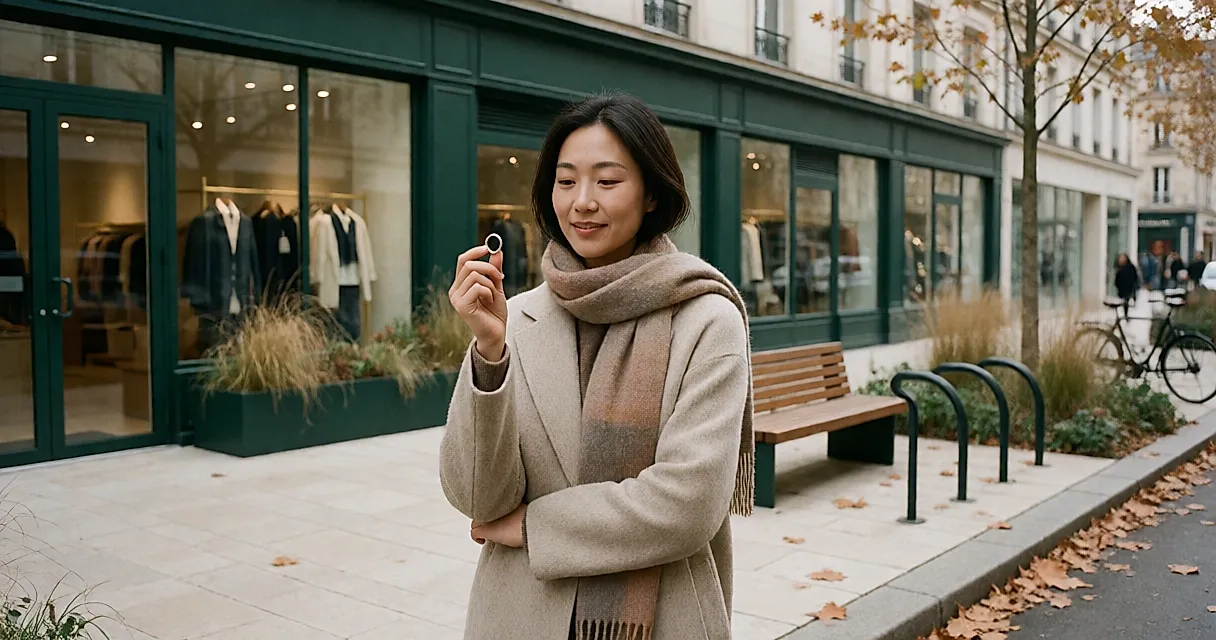
Two rings, same design, side by side on a velvet tray, and two prices that no longer have anything to do with each other. One went through a mould; the other came out of a bed of metal powder. Same starting file, same photo on the product page, and yet they are not quite the same piece of jewellery.
This is the quiet grey area of 3D-printed jewellery: the printer almost never makes the piece you end up wearing. It makes a model. Knowing what happens next is knowing what you are paying for.
The printer makes a model, not the piece
In most workshops, a wax or resin version is printed first: an exact replica of the jewellery, in a fragile form. It is buried in a plaster cylinder and heated. The wax melts and disappears, and molten metal takes its place. That is lost-wax casting, a few thousand years old and made far more precise by 3D printing. The printer is a pair of hands, not a foundry.
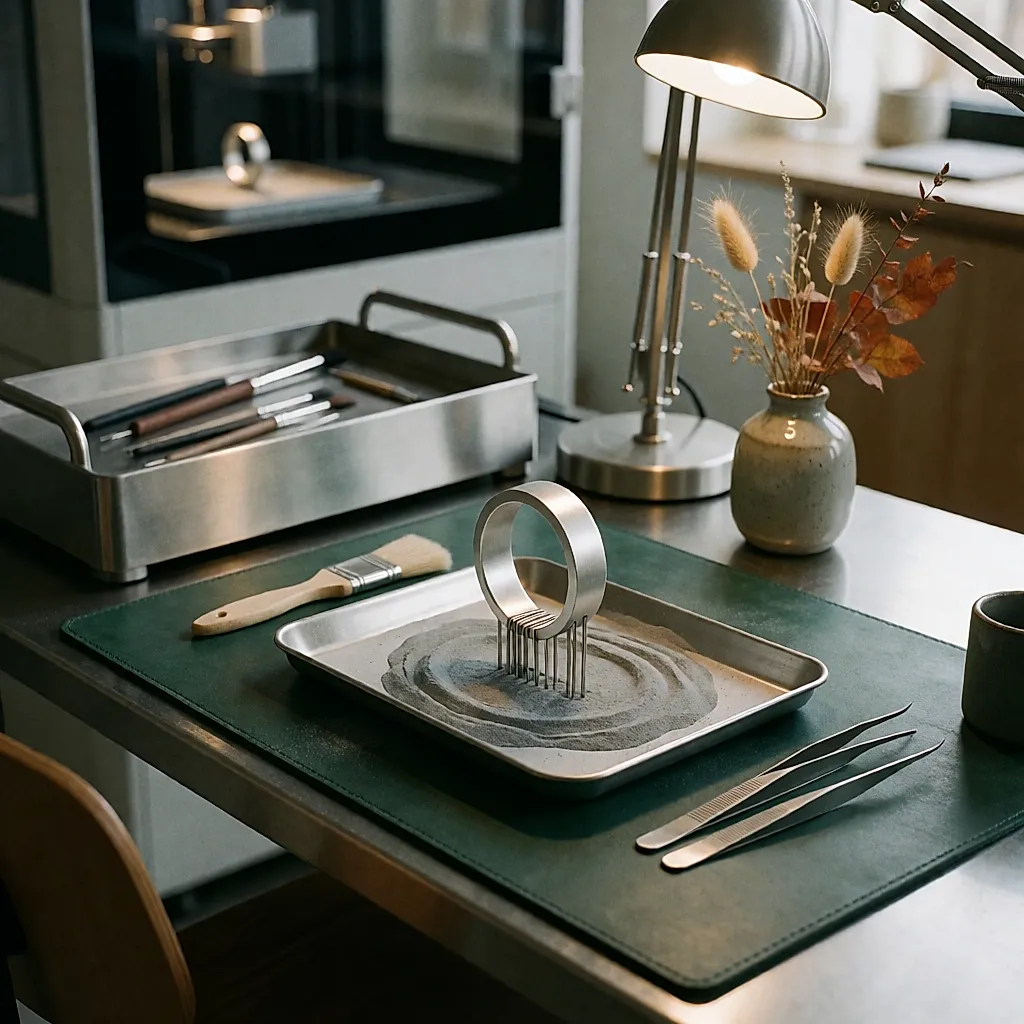
The other family is laser sintering of metal: the machine spreads a layer of powder, a laser draws the shape, another layer goes down, and the piece builds up like that, with no mould at all. It comes out rough, hanging on its supports, with a matte grain that has to be sanded back. Two ways of making the same thing, but does it actually change anything on your hand?
Where the difference shows
In a shop window, at arm's length, you will not spot it. Under a loupe, you will. A cast piece arrives with a fairly smooth surface, which a fine polish finishes off cleanly; a sintered piece often keeps a grainier texture and needs more work to reach a shine. Nothing disqualifying: some makers make it their signature, a very contemporary matte look.
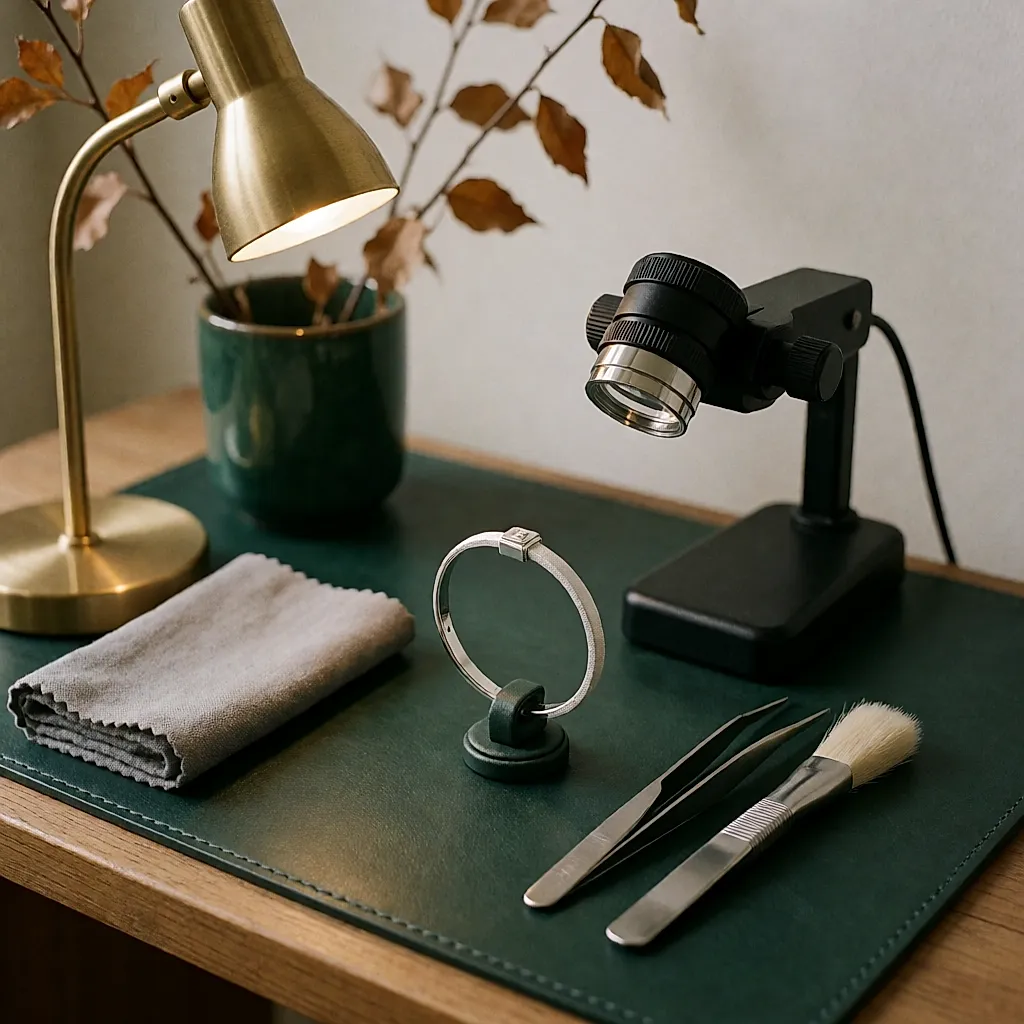
Where it really counts is in the thin parts: the catch on a clasp, the claw of a setting, the vein of a leaf. The finer the shape, the more the method and the metal decide whether it holds. And the clasp? That is the part tested first, often before you get to test it yourself. Ask whether it is cast with the body of the piece or added afterwards.
One piece or thirty
A model that is printed and then cast has one big advantage: a flexible mould can be taken from the piece, and wax copies pulled from it. For ten, twenty, thirty examples, that is the most cost-effective route, because the cost of the mould is spread across the run. For a single piece, you are paying for that mould on your own, which is why some quotes sting.
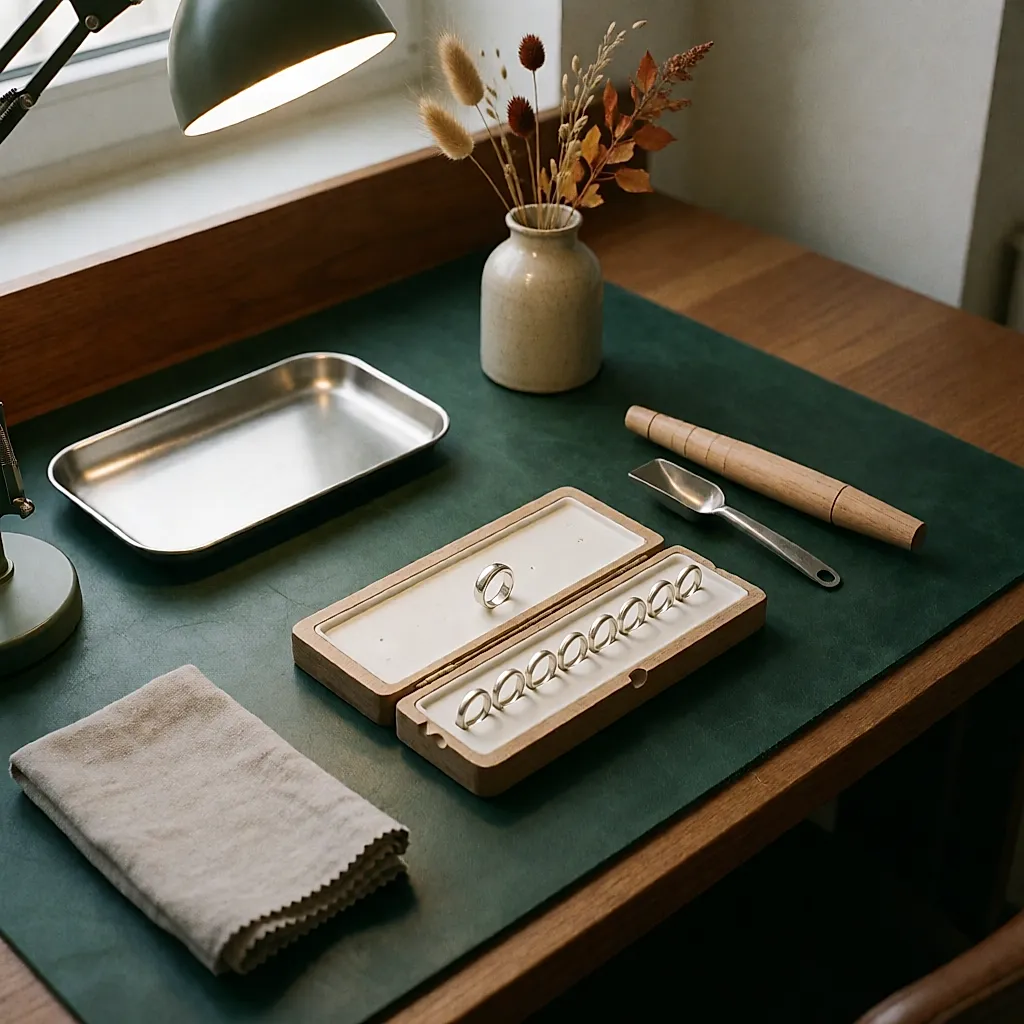
Sintering, by contrast, does not care about batch size: every piece is reprinted from the file. Handy for a one-off, a made-to-measure size or a small name engraved inside. A name? That is a detail in the file, not an investment, which does change things for a gift.
The question to ask before you order
One sentence is enough to sort the wheat from the chaff: "Is the finished piece cast in metal, or sintered?" A maker who knows what they are talking about answers straight, usually adding the alloy, the weight in grams and the minimum thickness they guarantee. A seller who dodges the question is mostly selling a nice photograph.
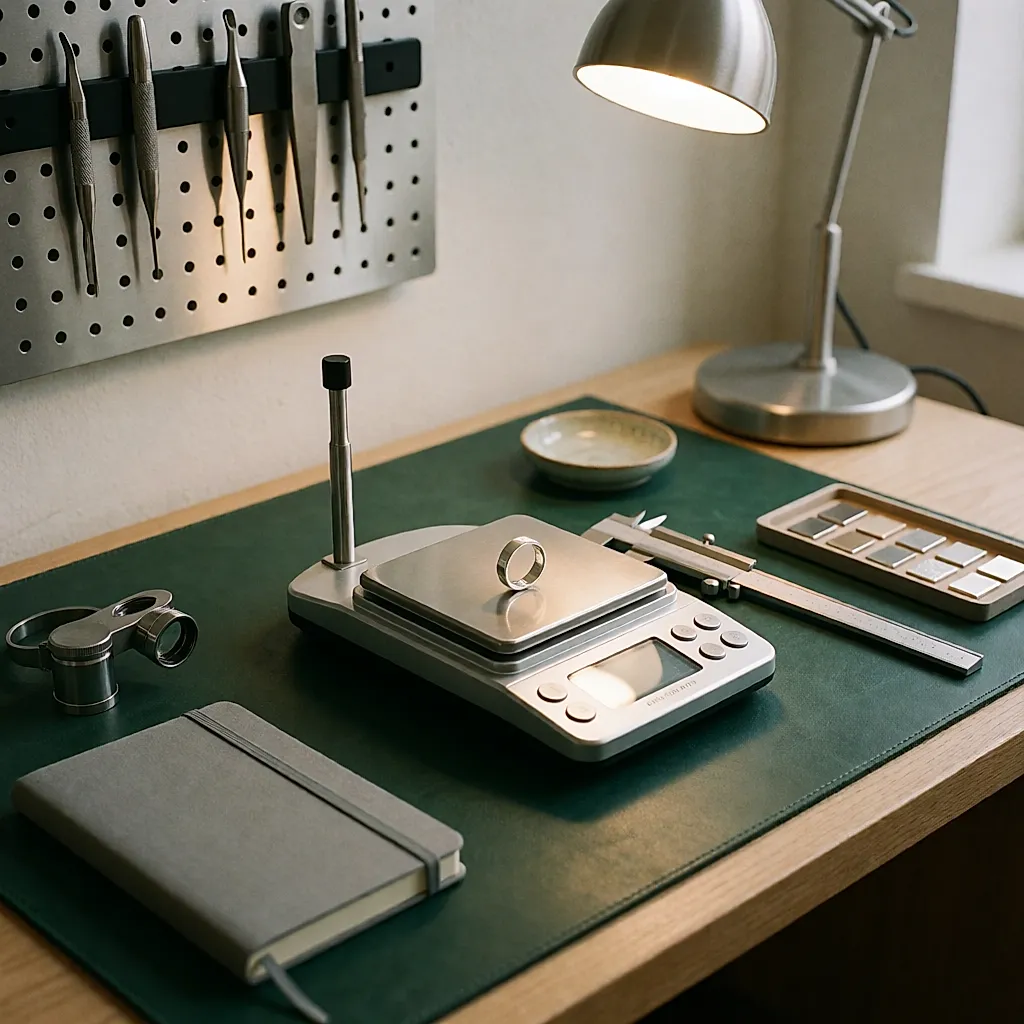
Then narrow it down: the exact metal, the lead time, and what happens if the ring does not fit. A cast piece is more readily resized by a jeweller; a sintered piece needs a properly equipped workshop. Better to know that before than after.
The four questions to send before you click: cast or sintered? Which alloy exactly, and how many grams? Is the clasp cast as part of the piece? Who carries out repairs, and under what guarantee?
Budget
As a rough guide in the UK, expect somewhere around £80 to £220 for a silver piece printed in wax and cast as a one-off, and more like £50 to £150 for a small sintered steel or bronze model. Solid sintered silver goes up a step: often £180 to £350 a piece, because precious-metal powder is expensive and hand-finishing is slow. Treat these as ballpark figures rather than quotes.
What moves the number? The metal and its market price, the weight, the polishing hours, the number of pieces. One good habit: ask for the price per gram and the making cost separately. That is how you spot the quotes that add up, and the ones that do not.
One obvious thing we sometimes forget: 3D-printed jewellery is not a category of jewellery, it is a way of making it. The real luxury is not the machine. It is the metal, the finishing and a clasp that does not give way in the middle of dinner. Ask your question, compare two quotes, and let the piece do the talking once it is on your hand.

Comments
Your opinion matters: rate the article, react and reply to comments.
Comments are moderated; AI-assisted comments are flagged. Text emoticons (8-), :-), <3…) are automatically shown as images.