

You come back from the beach with hair stiff with salt, a scalp that feels tight and a very clear urge to reach for the straighteners. Let's be honest: it is pretty much everyone's reflex. Except salt, wind and sand have already created a wave pattern that a curling iron would take twenty minutes to imitate — with one sizeable caveat, because they damage the hair fibre while they work. So why fight a movement that is already there?
The wave that forgives everything
The principle is simple: an uneven wave, some volume, and a few strands around the face with a little more definition. It is the exact opposite of a precision blow-dry that cannot cope with a single hair out of place. The beach-wave and mermaid-wave trends that have been doing the rounds on social media for the past few summers are built on precisely that softness.
There are three ways to wear it. Natural waves left to air-dry, which work on their own if your cut is layered. Worked waves, created with a diffuser or a wide-barrel tong on large sections. And the faux-undone look, where the roots stay smooth and only the mid-lengths and ends move.

The wet-bun method
This is one I have kept in my back pocket for years, and it still works on days when I have neither the time nor the inclination to plug anything in. On towel-dried hair, twist the lengths into a loose bun, secure it without pulling tight and leave it to dry. An hour at home, ten minutes in the car, whatever fits. When you take it down, the wave is soft, never crimped.
To set the movement without weighing hair down, a few drops of dry oil, scrunched through the mid-lengths and ends, are enough. If two or three sections refuse to play ball, go over them one by one with a curling tong — any more and you lose the natural look.
The one step worth adding: after a swim, rinse your hair in fresh water, then apply a leave-in treatment before you go back out into the sun. Salt and UV dry out the hair fibre; a protective layer beforehand can help limit damage that sometimes only shows up later.

Buns and accessories
The bun remains the beach's best friend: high, low, to one side, as long as it is not scraped back into submission. Let two or three waves escape at the temples; that is exactly what separates a quick updo from one that looks visibly thrown together.
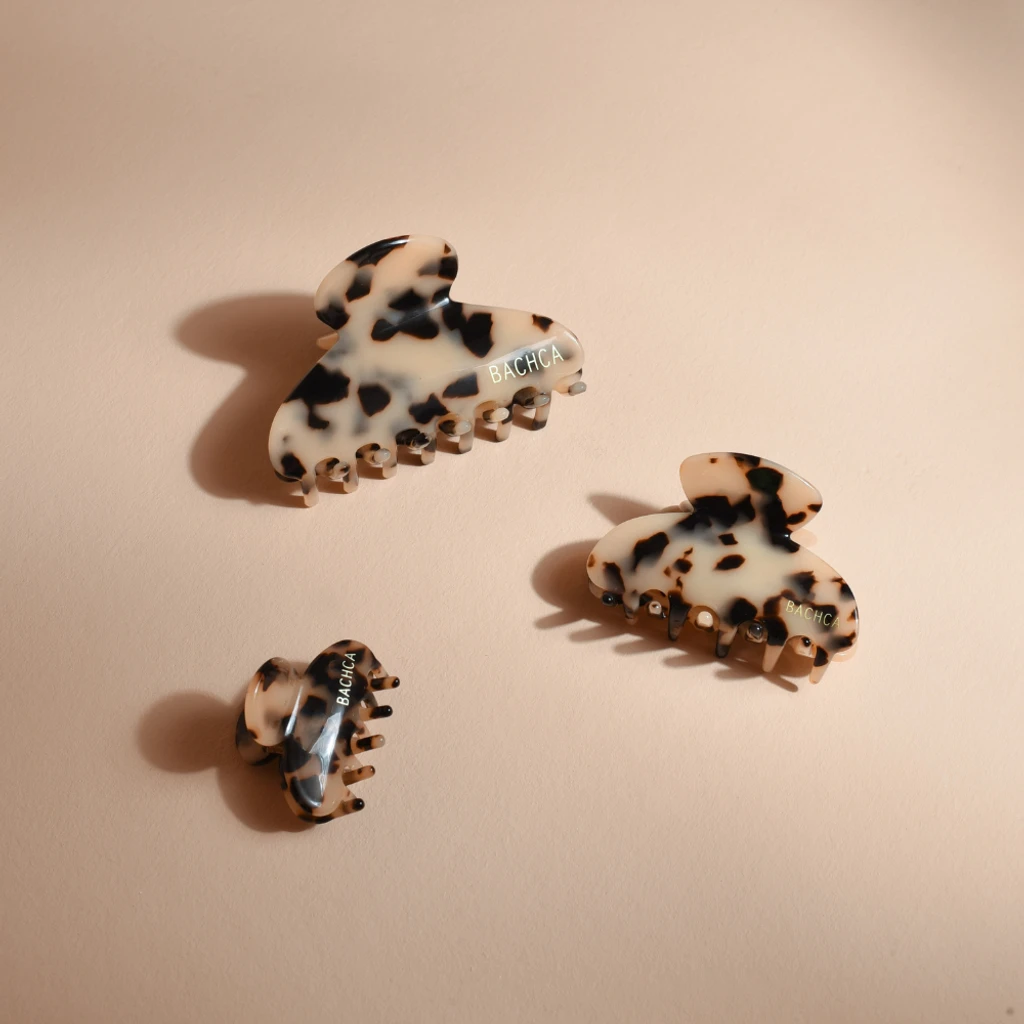
As for accessories, a tie headband, a thin Alice band, a tortoiseshell clip, a gold hair clip or a cotton scarf will pull a messy mane together and make it look considered.

What if your hair is short?
Short hair is not left out. A layered bob with movement, a lightly textured pixie and you're done: less bulk, a quicker dry, and a simple texturising spray is enough to add interest.

The product choices that actually matter
A salt spray, a dry oil or a mousse should be chosen on the basis of its INCI list, not its packaging. Look at what comes at the top of the ingredients list, be wary of very alcohol-heavy formulas that dry hair out, and favour lightweight textures over heavy silicones that flatten the fibre. A label such as COSMOS Organic or Ecocert sets rules around the share of natural-origin ingredients and processing: it does not guarantee styling performance, but it does limit wildly fanciful formulas.
The rest comes down to packaging: refills where the brand offers them, glass or cardboard bottles, solid formats for shampoo, refill stations at independent beauty shops. If it is made locally, that is often on the label — worth checking.
One honest caveat: for a texture spray that genuinely lasts through a windy day, the conventional version can still be more effective than natural alternatives. In that case, own it and stick to one well-chosen bottle rather than three mediocre ones.




What it costs
The ranges below are rough UK estimates from the high street and salons; they vary by brand and retailer.
- Texturising spray or salt spray: expect around £5 to £12 in the supermarket or on the high street, and £15 to £30 at a beauty retailer or salon.
- Dry hair oil: around £8 to £20 on the high street, £25 to £45 for professional ranges.
- Styling mousse: around £5 to £15.
- Headbands, Alice bands and clips: around £5 to £25 depending on the material.
- Curling tong: around £25 to £80 on the high street, up to £200 from professional brands. Air stylers cost several hundred pounds: only worth considering if you style your hair often.
- After-sun salon treatment: around £30 to £60 depending on hair length.
What pushes the price up: the size, whether there are UV filters, and where you buy it. In the supermarket, you are mostly paying for volume; at a beauty retailer, you are also paying for the brand.
Léna's verdict: yes, beach waves are a quick and inexpensive summer option, on one condition — protect your hair first, and stop chasing perfection. A wave that is too regular is just a blow-dry in denial.
Sources
- NHS — sun safety and UV protection, nhs.uk.
- Cancer Research UK — sun and UV protection, cancerresearchuk.org.


Comments
Your opinion matters: rate the article, react and reply to comments.
Comments are moderated; AI-assisted comments are flagged. Text emoticons (8-), :-), <3…) are automatically shown as images.