

It's 11.47pm, and your thumb is hovering over the Buy button. The bag is beautiful, the photo slightly blurred, the description three lines long. A lucky find, or a bad idea dressed up as grained leather? For years, the answer depended on a mysterious sixth sense – and a fair bit of luck.
Gut instinct is a comforting lie
Let's be honest: second-hand shopping used to be played by feel. You scanned listings, compared three models at a glance, asked a friend who 'knows about this sort of thing', and ended up haggling based on how the seller sounded. The trouble is, gut instinct can't be checked. Two sellers can list the same bag in the same condition at very different prices without either of them being plainly wrong.

The result: sometimes you bought brilliantly, and sometimes you paid full retail price for a piece whose corners had survived three house moves. Not a reason to give up on second-hand – just a reason to look twice before you click.
Enter the price benchmark
What's changing is that price is no longer just an opinion. Some resale platforms and tracking tools are beginning to publish benchmarks: averages of observed sales, model by model, condition by condition. Not a magic label, more of a compass showing what the market has actually paid over recent months for a specific piece in that condition. At last, a marker in an ocean of randomly pitched prices.

The point is not to tell you how much to spend, but to avoid two symmetrical mistakes: overpaying in a Sunday-night burst of enthusiasm, or letting a decent piece go because you have no point of comparison. A sought-after second-hand bag deserves a little study – like rent or a train ticket.
When image search replaces the model name
The second shift is quieter: image search. For a long time, finding a specific bag online meant knowing its exact model name – and, honestly, half the time you don't know it. You spot a bag on someone's arm on the Tube, and you come away with a blurry photo and a complete mystery.
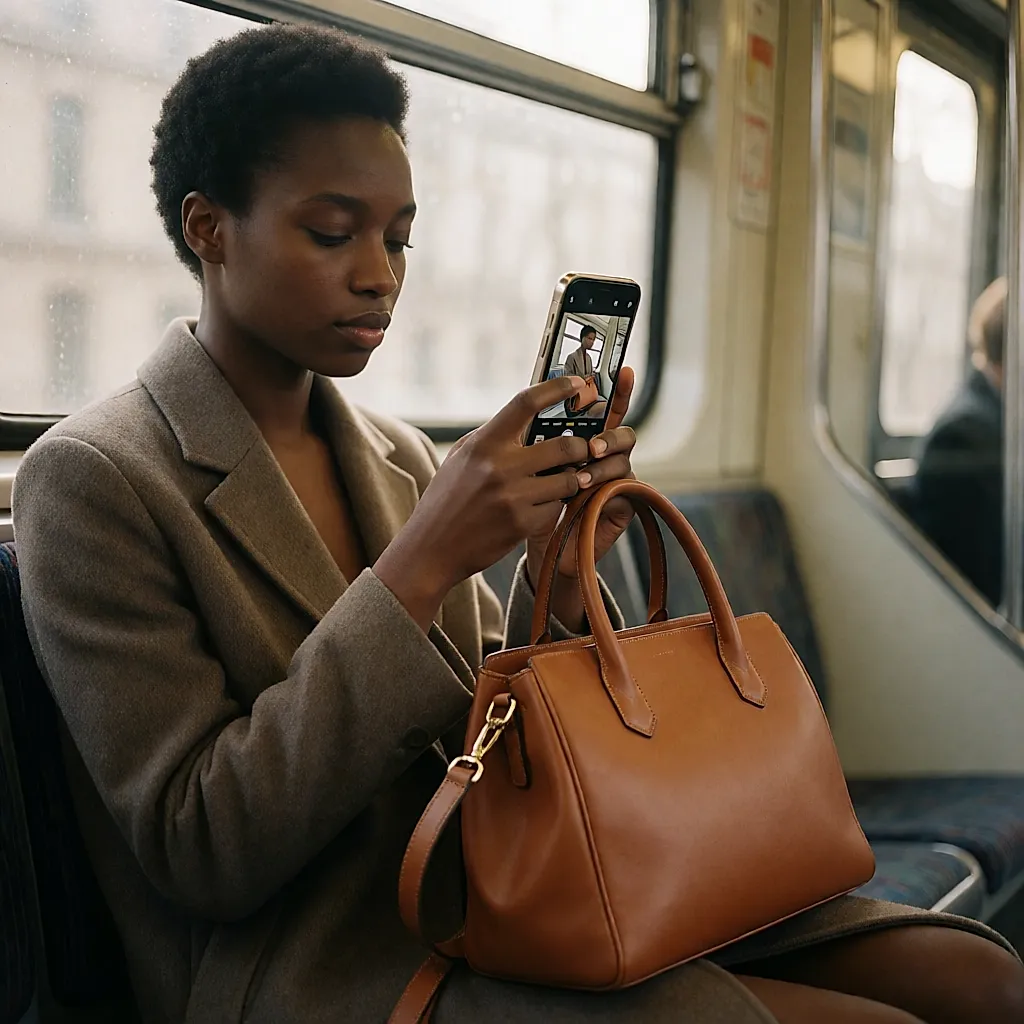
Now you take a photo, crop it, and the engine suggests visually similar pieces. Recognition can still be imperfect: it may confuse one colourway with its neighbour, struggle with an older edition, and hesitate between two clasps. And above all, it says nothing about authenticity. A look-alike looks similar; that is rather the point.

How much should you spend?
So how much should you put aside? Rough ranges help you get your bearings. As a guide, budget roughly £70–£220 for a mid-range leather bag in good condition, £260–£800 for a sought-after designer piece, and several thousand pounds for the most in-demand icons. What moves the figure: the state of the corners and handles, the lining, whether the box and receipt are included, the year, the colour – a seasonal shade can sometimes fetch more than a classic.
Where to look? Online resale platforms for choice and price history, resale boutiques where you can handle the leather in person, auction houses for rare pieces. And don't overlook specialist vintage fairs, provided you go with money you are prepared to lose.
The blind spots
A benchmark is no substitute for your own eye on the goods. Ask for sharp photos of the corners, handles, stitching, clasp and interior label. Vegetable-tanned leather ages beautifully; a loose lining much less so. And be wary of listings that look too smooth: three photos, no detail, a surprisingly low price – you know the type.
The reflex that matters is the same as in a shop: ask, compare and be willing to walk away. A bag you love but don't dare question is already a small alarm bell.
Before you confirm: check the returns policy, whether there is an authentication service, and that the payment method is secure. A costly piece with no possibility of return is a gamble – not a good deal.
The benchmark and image search do the thankless work: placing the price, finding the piece. They won't tell you whether the bag sits well on your shoulder, or whether it will last three winters. That is your business – and quite right too.


Comments
Your opinion matters: rate the article, react and reply to comments.
Comments are moderated; AI-assisted comments are flagged. Text emoticons (8-), :-), <3…) are automatically shown as images.